

Hey there! As a supplier of Centrifugal Pump Mixed Flow, I often get asked about the maximum viscosity these pumps can handle. It's a super important question, especially for those in industries where they're dealing with all sorts of fluids, from thin and watery to thick and gooey. So, let's dive right in and explore this topic.
First off, let's understand what viscosity is. Viscosity is basically a measure of a fluid's resistance to flow. Think of it like this: water has a low viscosity because it flows easily, while honey has a high viscosity because it's thick and doesn't flow as freely. When it comes to centrifugal mixed - flow pumps, viscosity plays a huge role in how well they work.
Centrifugal mixed - flow pumps are pretty awesome. They combine the features of radial and axial flow pumps. They're great for moving large volumes of fluid at moderate pressures. But when the viscosity of the fluid goes up, things start to get a bit tricky.
When you're dealing with low - viscosity fluids, like water or light oils, centrifugal mixed - flow pumps perform really well. They can move the fluid efficiently, and you get good flow rates and pressure. But as the viscosity increases, the pump has to work harder. The thick fluid creates more resistance, which means the pump has to use more energy to move it.
So, what's the maximum viscosity a centrifugal mixed - flow pump can handle? Well, it's not a one - size - fits - all answer. It depends on a few factors.
One of the main factors is the pump design. Different pumps are built to handle different viscosities. Some pumps are designed with larger impellers and wider flow passages, which can handle thicker fluids better. These pumps can create more force to push the viscous fluid through the system.
Another factor is the speed of the pump. Generally, slower pump speeds are better for high - viscosity fluids. At lower speeds, the pump can handle the increased resistance without overloading. If you try to run the pump too fast with a thick fluid, it can cause problems like cavitation (when bubbles form in the fluid due to low pressure) and reduced efficiency.
The temperature of the fluid also matters. Viscosity is temperature - dependent. As the temperature of a fluid increases, its viscosity usually decreases. So, if you're dealing with a thick fluid, heating it up a bit can make it easier for the pump to handle.
Now, let's talk about some real - world numbers. In general, centrifugal mixed - flow pumps can handle viscosities up to around 1000 centipoise (cP) without too many issues. But this can vary widely depending on the pump design and the other factors we mentioned. Some specialized pumps can handle viscosities up to 5000 cP or even higher, but they're usually more expensive and may require special maintenance.
If you're in an industry where you're dealing with high - viscosity fluids, like the food industry (think thick sauces and syrups), the chemical industry (with various thick chemicals), or the oil and gas industry (heavy crude oils), you need to choose the right pump carefully.
Here are some of the products we offer as a Centrifugal Pump Mixed Flow supplier:
- Submersible Mixed Flow Pump: These pumps are great for applications where the pump needs to be submerged in the fluid. They're often used in wastewater treatment plants, irrigation systems, and other similar applications.
- Vertical Mixed Flow Pump: Vertical pumps are a good choice when you have limited space. They can be installed vertically, which saves floor space. They're commonly used in power plants, water supply systems, and industrial processes.
- Pressure Diesel Submersible Mud Mixed Flow Pump: These pumps are designed to handle thick, muddy fluids. They're often used in mining operations, construction sites, and other places where there's a lot of mud and sediment.
When you're choosing a pump for a high - viscosity application, it's important to do your research. You need to know the viscosity of the fluid you're dealing with, the flow rate you need, and the pressure requirements. You can also consult with our experts. We've got a team of experienced engineers who can help you select the right pump for your specific needs.
If you're not sure about the viscosity of your fluid, you can use a viscometer to measure it. There are different types of viscometers available, and they work in different ways. Some measure the time it takes for a fluid to flow through a tube, while others measure the resistance of the fluid to a rotating object.
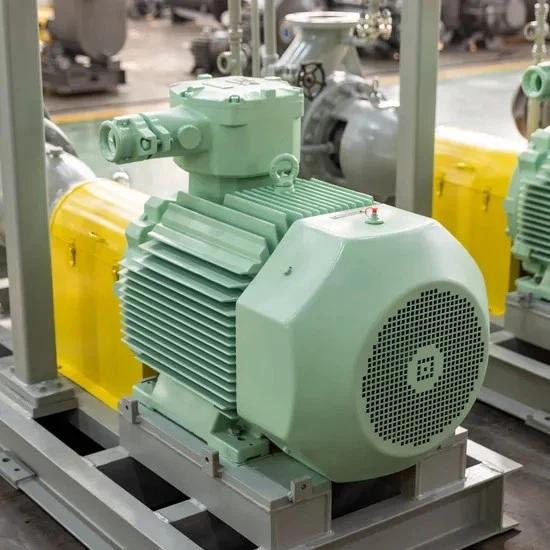

In addition to choosing the right pump, it's also important to maintain it properly. High - viscosity fluids can cause more wear and tear on the pump components. You need to make sure you're using the right lubricants, and you should regularly check the pump for any signs of damage or wear.
So, to sum it up, the maximum viscosity a centrifugal mixed - flow pump can handle depends on several factors, including pump design, speed, fluid temperature, and more. In general, they can handle viscosities up to around 1000 cP, but specialized pumps can handle much higher viscosities.
If you're in the market for a centrifugal mixed - flow pump, whether it's for a low - viscosity or high - viscosity application, we're here to help. We've got a wide range of pumps to choose from, and our team can provide you with all the information you need. Don't hesitate to reach out to us for more details and to start a procurement discussion. We're looking forward to working with you!
References:
- "Pump Handbook" by Igor J. Karassik et al.
- Various industry research papers on centrifugal pump performance with high - viscosity fluids.