

Hey there! As a supplier of Multistage Chemical Pumps, I often get asked about the head capacity of these pumps. So, I thought I'd write this blog to break it down for you in plain English.
First off, let's understand what head capacity means. In simple terms, head capacity refers to the height to which a pump can lift a fluid. It's a measure of the pump's ability to overcome the resistance in the system and move the fluid to a certain elevation. Think of it like trying to pour water from a bucket into a tall glass. The higher the glass, the more effort you need to put in to get the water up there. That's similar to what a pump does – it has to work against gravity and other forces to move the chemical fluid to the desired height or pressure.
Now, when it comes to multistage chemical pumps, things get a bit more interesting. These pumps are designed with multiple stages, which are essentially a series of impellers working together. Each impeller adds to the pressure and head capacity of the pump. It's like having a team of people passing a ball up a staircase. Each person gives the ball a little boost, and by the time it reaches the top, it's gone a long way.
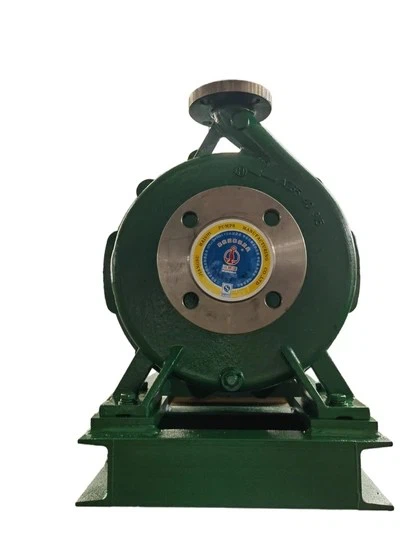
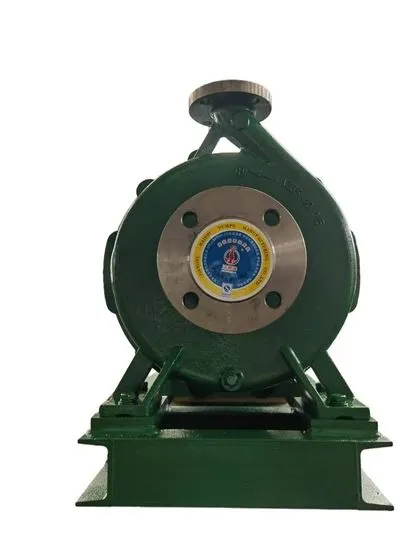
The head capacity of a multistage chemical pump depends on several factors. One of the most important is the number of stages. Generally, the more stages a pump has, the higher its head capacity. For example, a two - stage pump will have a lower head capacity compared to a five - stage pump. This is because each additional stage adds more energy to the fluid, allowing it to reach a greater height or pressure.
Another factor is the design of the impellers. The shape, size, and number of blades on the impellers can significantly affect the pump's performance. Well - designed impellers can efficiently transfer energy from the motor to the fluid, increasing the head capacity. It's a bit like the difference between a well - designed fan blade and a poorly made one. The good one will move more air with less effort.
The speed of the pump also plays a crucial role. A faster - spinning pump can generate more pressure and thus have a higher head capacity. However, there are limits to how fast a pump can spin, as too high a speed can cause damage to the impellers and other components.
Now, let's talk about why head capacity is so important in chemical applications. In the chemical industry, fluids often need to be transported over long distances or to high - elevation storage tanks. A pump with insufficient head capacity won't be able to move the fluid effectively, leading to slow production, inefficient processes, and even potential safety hazards. For instance, if a chemical needs to be pumped to a reaction vessel on the top floor of a factory, a pump with low head capacity might not be able to get it there, causing delays in the chemical reaction.
As a supplier, we offer a range of multistage chemical pumps with different head capacities to meet various customer needs. Our Multistage Petrochemical Process Pump is designed for high - pressure petrochemical applications. It has multiple stages and advanced impeller designs to ensure a high head capacity, making it suitable for transporting heavy - duty chemicals over long distances.
Our Horizontal Split Multistage Pump is another great option. It's known for its reliability and high - performance head capacity. The horizontal split design allows for easy maintenance, which is crucial in chemical applications where downtime can be very costly.
And of course, our Multistage Chemical Pump is a versatile choice. It can be customized with different numbers of stages and impeller designs to achieve the desired head capacity for your specific chemical process.
If you're in the market for a multistage chemical pump, it's important to accurately assess your head capacity requirements. Consider the height to which you need to lift the fluid, the distance it needs to travel, and the type of chemical you're handling. You should also take into account any future expansion plans for your facility, as you might need a pump with a higher head capacity down the line.
Don't hesitate to reach out to us if you have any questions or need help in selecting the right pump for your application. We have a team of experts who can guide you through the process and ensure that you get a pump with the appropriate head capacity for your chemical pumping needs. Whether you're a small - scale chemical producer or a large industrial plant, we've got the right solution for you.
In conclusion, understanding the head capacity of a multistage chemical pump is essential for efficient and safe chemical processing. By considering factors like the number of stages, impeller design, and pump speed, you can choose a pump that meets your specific requirements. And as your trusted supplier, we're here to help you every step of the way. So, if you're ready to take your chemical pumping to the next level, let's start the conversation!
References
- Chemical Pump Handbook, Various Authors
- Pump Engineering Principles, Industry Publications