

Hey there! As a supplier of multistage pumps, I often get asked about the efficiency of these amazing machines. So, let's dive right in and explore what makes multistage pumps tick and how efficient they really are.
Understanding Multistage Pumps
First off, what exactly is a multistage pump? Well, unlike single - stage pumps that have just one impeller to increase fluid pressure, multistage pumps are equipped with multiple impellers arranged in series. Each impeller adds to the pressure of the fluid as it passes through the pump. This design allows multistage pumps to generate much higher pressures compared to their single - stage counterparts.
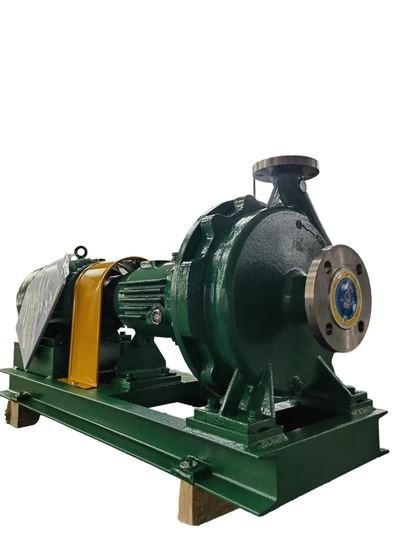
We offer a variety of multistage pumps, such as the Multistage Chemical Pump, Multistage Submersible Centrifugal Pump, and Industrial Sewage Multistage Pump. Each type is tailored to specific applications, but they all share the core principle of multiple impellers working together.
Factors Affecting the Efficiency of Multistage Pumps
1. Design and Construction
The design of a multistage pump plays a huge role in its efficiency. A well - designed pump will have impellers with optimized shapes and sizes, which can minimize energy losses due to fluid friction and turbulence. The internal flow passages also need to be smooth and properly sized to ensure that the fluid can flow through the pump with as little resistance as possible. For example, if the flow passages are too narrow, the fluid will experience high - velocity flow, leading to increased energy consumption.
2. Number of Stages
The number of stages in a multistage pump is a double - edged sword when it comes to efficiency. On one hand, more stages can generate higher pressures, which is great for applications that require high - pressure output. However, each additional stage also adds a bit of inefficiency due to the extra energy required to drive the additional impellers and the associated losses in the inter - stage connections. So, it's all about finding the right balance between the required pressure and the number of stages to achieve optimal efficiency.
3. Operating Conditions
The efficiency of a multistage pump can vary significantly depending on the operating conditions. For instance, if the pump is operating at a flow rate that is far from its design point, the efficiency will drop. This is because the impellers are designed to work most efficiently at a specific flow rate and pressure. If the pump is forced to operate at a much lower or higher flow rate, the fluid flow patterns inside the pump will be disrupted, leading to increased energy losses.
Another important factor is the viscosity of the fluid being pumped. High - viscosity fluids, like thick oils or syrups, require more energy to pump compared to low - viscosity fluids, like water. So, when pumping high - viscosity fluids, the efficiency of the multistage pump will generally be lower.

Measuring the Efficiency of Multistage Pumps
The efficiency of a pump is usually measured using two main parameters: hydraulic efficiency and overall efficiency.
Hydraulic Efficiency
Hydraulic efficiency measures how well the pump converts the mechanical energy input into hydraulic energy (pressure and flow). It takes into account the losses due to fluid friction, leakage, and shock losses inside the pump. A high hydraulic efficiency means that the pump is doing a good job of transferring energy to the fluid.
The formula for hydraulic efficiency ($\eta_h$) is:
$\eta_h=\frac{\rho g H Q}{P_{shaft}}$
where $\rho$ is the density of the fluid, $g$ is the acceleration due to gravity, $H$ is the head (pressure) developed by the pump, $Q$ is the flow rate, and $P_{shaft}$ is the power input to the pump shaft.
Overall Efficiency
Overall efficiency takes into account not only the hydraulic losses but also the mechanical losses (such as bearing friction and seal losses) and electrical losses (if the pump is electrically driven). It gives a more complete picture of how efficiently the pump is using the input energy.
The formula for overall efficiency ($\eta_{overall}$) is:
$\eta_{overall}=\frac{\rho g H Q}{P_{input}}$
where $P_{input}$ is the total power input to the pump system, including any electrical or mechanical losses.
Benefits of High - Efficiency Multistage Pumps
1. Energy Savings
One of the most obvious benefits of using a high - efficiency multistage pump is energy savings. Since these pumps can convert a larger percentage of the input energy into useful hydraulic energy, they require less power to operate. This can lead to significant cost savings over the lifetime of the pump, especially for applications that require continuous pumping.
2. Reduced Environmental Impact
By using less energy, high - efficiency multistage pumps also have a reduced environmental impact. They produce fewer greenhouse gas emissions, which is great for the planet. In today's world, where environmental sustainability is a top priority, choosing an efficient pump can make a real difference.
3. Longer Lifespan
Efficient pumps tend to operate more smoothly and with less stress on the components. This means that they are less likely to experience premature wear and tear, leading to a longer lifespan. A longer - lasting pump not only saves money on replacement costs but also reduces downtime, which is crucial for many industrial applications.
How We Ensure High Efficiency in Our Multistage Pumps
As a multistage pump supplier, we take several steps to ensure that our pumps are as efficient as possible.
Advanced Design and Engineering
We use state - of - the - art design tools and software to optimize the shape and size of the impellers and the internal flow passages of our pumps. Our engineers work hard to minimize energy losses and ensure that the pumps can operate at their peak efficiency across a wide range of operating conditions.
Quality Manufacturing
We only use high - quality materials in the manufacturing of our pumps. This ensures that the components are durable and can withstand the rigors of continuous operation. We also have strict quality control measures in place to ensure that every pump that leaves our factory meets the highest standards of efficiency and performance.
Testing and Optimization
Before a pump is shipped to a customer, we subject it to rigorous testing. We measure the pump's efficiency at different flow rates and pressures to ensure that it meets or exceeds the specified performance criteria. If necessary, we make adjustments to the pump to optimize its efficiency.
Contact Us for Your Multistage Pump Needs
If you're in the market for a multistage pump, whether it's a Multistage Chemical Pump, Multistage Submersible Centrifugal Pump, or Industrial Sewage Multistage Pump, we're here to help. Our team of experts can assist you in selecting the right pump for your specific application and ensure that it operates at maximum efficiency. Don't hesitate to reach out to us to discuss your requirements and start a procurement negotiation.
References
- Pump Handbook, Karassik, I. J., Messina, J. P., Cooper, P. T., & Heald, C. C.
- Fluid Mechanics, Frank M. White
- Principles of Pumping Machinery, Jack B. Karassik