

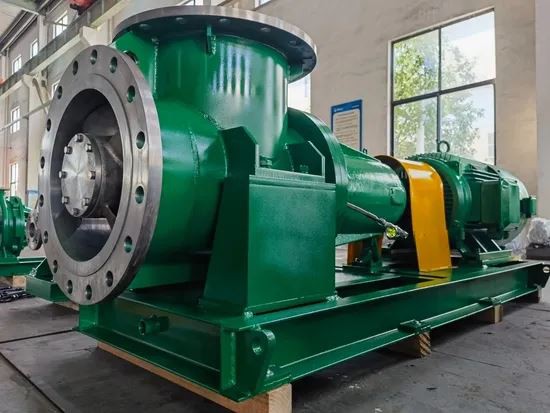
As a reputable supplier of Self Priming Axial Flow Pumps, I understand the importance of ensuring these pumps operate at their optimal performance. One crucial aspect that significantly affects the pump's efficiency and functionality is the blade angle. In this blog post, I'll guide you through the process of adjusting the blade angle of a self - priming axial flow pump, providing you with scientific and practical insights.
Understanding the Basics of Blade Angle in Axial Flow Pumps
Before delving into the adjustment process, it's essential to comprehend why the blade angle matters. The blade angle in an axial flow pump determines the direction and magnitude of the force exerted on the fluid. A well - adjusted blade angle can enhance the pump's head, flow rate, and overall efficiency. Conversely, an incorrect blade angle can lead to reduced performance, increased energy consumption, and even premature wear and tear of the pump components.
The blade angle is typically measured relative to the impeller's plane of rotation. There are two main types of blade angles: the inlet blade angle and the outlet blade angle. The inlet blade angle affects how the fluid enters the impeller, while the outlet blade angle determines how the fluid exits the impeller. Adjusting these angles can fine - tune the pump's performance according to the specific requirements of the application.
Tools Required for Blade Angle Adjustment
To adjust the blade angle of a self - priming axial flow pump, you'll need a few essential tools. These include:
- Screwdrivers: Both flat - head and Phillips - head screwdrivers are necessary for removing the pump's access panels and any fasteners holding the impeller in place.
- Angle Gauge: An angle gauge is used to accurately measure the blade angle before and after adjustment. This ensures that the new angle meets the desired specifications.
- Wrenches: Depending on the pump's design, you may need wrenches to loosen and tighten bolts and nuts during the adjustment process.
- Safety Equipment: Safety glasses, gloves, and a hard hat are essential to protect yourself from any potential hazards during the adjustment process.
Step - by - Step Guide to Adjusting the Blade Angle
Step 1: Preparation
First, ensure that the pump is completely shut down and disconnected from the power source. This is a crucial safety step to prevent any accidental start - up during the adjustment process. Next, remove the access panels of the pump to gain access to the impeller. Take note of the position of any components you remove, as you'll need to reassemble them correctly later.
Step 2: Measuring the Current Blade Angle
Use the angle gauge to measure the existing inlet and outlet blade angles. Record these measurements for reference. This will help you determine how much adjustment is needed to achieve the desired performance.
Step 3: Loosening the Blade Fasteners
Locate the fasteners that hold the blades in place on the impeller. Using the appropriate wrenches or screwdrivers, carefully loosen these fasteners. Be cautious not to over - loosen them, as this could cause the blades to move freely and potentially damage the pump.
Step 4: Adjusting the Blade Angle
Once the fasteners are loosened, you can start adjusting the blade angle. Refer to the pump's manual or the specific requirements of your application to determine the optimal blade angle. Use the angle gauge to make precise adjustments. Gradually move the blades to the desired angle, checking the measurement frequently to ensure accuracy.
Step 5: Tightening the Blade Fasteners
After adjusting the blade angle to the desired position, carefully tighten the blade fasteners. Make sure they are tightened evenly to prevent any imbalance in the impeller. Over - tightening can also cause damage to the blades or the impeller, so use a torque wrench if necessary to achieve the correct tightening torque.

Step 6: Reassembling the Pump
Once the blade angle adjustment is complete and the fasteners are tightened, reassemble the access panels and any other components you removed earlier. Double - check that all components are correctly installed and that there are no loose parts.
Step 7: Testing the Pump
Reconnect the pump to the power source and start it up. Monitor the pump's performance, including the flow rate, head, and power consumption. Compare these values with the expected performance based on the adjusted blade angle. If the performance is not satisfactory, you may need to make further adjustments.
Common Challenges and Troubleshooting
During the blade angle adjustment process, you may encounter some common challenges. Here are some solutions:
- Blades are Difficult to Move: If the blades are difficult to move, it could be due to corrosion or debris buildup. In this case, clean the blades and the impeller using a suitable cleaning agent. You may also need to use a lubricant to make the blades more movable.
- Imbalance in the Impeller: An imbalance in the impeller can cause vibration and noise during pump operation. This could be due to uneven blade angle adjustment or improper tightening of the blade fasteners. Check the blade angles again and ensure that the fasteners are tightened evenly.
- Poor Pump Performance After Adjustment: If the pump's performance does not improve after adjusting the blade angle, it could be due to incorrect angle adjustment or other underlying issues. Review the adjustment process and check the pump's other components, such as the seals and bearings, for any signs of damage.
Applications of Self - Priming Axial Flow Pumps
Self - priming axial flow pumps are widely used in various industries. For example, in the chemical process industry, Axial Flow Chemical Process Pump is often required to handle corrosive and viscous fluids. The ability to adjust the blade angle allows these pumps to be optimized for different chemical processes, ensuring efficient and reliable operation.
In the water circulation systems, Centrifugal Circulating Submersible Axial Flow Pump is commonly used. Adjusting the blade angle can enhance the pump's performance in circulating water, improving the overall efficiency of the system.
For irrigation purposes, Low Pressure Irrigation Type Axial Flow Pump is a popular choice. By adjusting the blade angle, these pumps can be customized to meet the specific water flow and pressure requirements of different irrigation systems.
Conclusion
Adjusting the blade angle of a self - priming axial flow pump is a technical but essential process that can significantly improve the pump's performance. By following the steps outlined in this blog post and being aware of the common challenges and troubleshooting methods, you can ensure that your pump operates at its best.
If you're in the market for a high - quality self - priming axial flow pump or need further assistance with blade angle adjustment or any other pump - related issues, feel free to contact us for a procurement discussion. We have a wide range of self - priming axial flow pumps to meet your specific needs, and our team of experts is always ready to provide you with professional advice and support.
References
- "Pump Handbook" by Igor J. Karassik et al.
- "Fluid Mechanics and Machinery" by Dr. R. K. Bansal.