


Basic Info.
| Max.Head | ~140m | Max.Capacity | 3960 M3/H |
| Driving Type | Motor | Impeller Number | Single-Stage Pump |
| Working Pressure | Low Pressure Pump | Influent Type of Impeller | Single Suction Pump |
| Position of Pump Shaft | Horizontal Pump | Pump Casing Combined | Horizontal Split Pumps |
| Mounting Height | Suction Centrifugal | Impeller | Closed |
| Usage | Pump, Pumps, Circulating Pump | Standard | GB/5657-1995;ISO9906-1999;GB/T13007-1991 |
| Temperature | ~200 Degree | Pressure | ~0.6MPa |
| Transport Package | Plywood Box | Specification | 1000.00cm * 2000.00cm * 1000.00cm |
| Trademark | haishi | Origin | Jiangsu, China |
| HS Code | 8413709990 | Production Capacity | 20000 PCS/Year |
Products Description
Axial Flow Chemical Process Pump Production Process
Axial Flow Chemical Process Pump Production Process
The production of an Axial Flow Chemical Process Pump involves several critical steps to ensure the highest quality, efficiency, and durability in handling aggressive chemical fluids in industrial processes. Below is the typical manufacturing process flow:
1. Design and Engineering
- Initial design based on process requirements (flow rate, pressure, chemical compatibility).
- Selection of materials: stainless steel, alloys, or other corrosion-resistant materials are chosen for pump components.
- Development of a detailed engineering drawing and specifications for the pump's mechanical and hydraulic design.
2. Material Sourcing and Quality Control
- Raw material procurement: High-quality metals, seals, and gaskets are sourced from certified suppliers.
- Initial inspection and testing of materials to ensure they meet industry standards for strength, corrosion resistance, and chemical compatibility.
3. Casting and Machining
- Casting of pump casing and impellers using precision molds for accuracy.
- Machining of components such as shafts, bearings, and impellers to meet the exact specifications.
- Use of CNC machines to ensure uniformity, dimensional accuracy, and smooth finishes on pump components.
4. Assembly
- Assembly of pump components: Impeller, shaft, casing, and motor assembly are put together according to engineering specifications.
- Installation of seals, bearings, and coupling for smooth, leak-free operation.
- Assembly of the pump drive mechanism (either electric motor or other power sources) to the impeller and shaft.
5. Testing and Inspection
- Hydraulic testing: The pump is tested for leakage, pressure, and flow efficiency under controlled conditions.
- Performance testing: Flow rate, efficiency, and mechanical stability are tested to ensure compliance with industry standards.
- Quality checks on every component, ensuring that the pump meets all operational specifications and requirements.
6. Final Quality Assurance
- Final inspection of the fully assembled pump for proper alignment, performance, and safety features.
- Packaging and labeling, including providing technical documentation and certifications.
- Ready for shipment to customers with comprehensive operational manuals and warranty information.
7. Delivery and Customer Support
- Final product is delivered to the client or installation site with full technical support available for setup and integration.
- Ongoing customer service to ensure smooth operation, with post-sale maintenance and spare parts supply available as required.

Company profile

We offer integrated solutions from embryo casting to complete machine with short lead time and controlled quality.


Main product
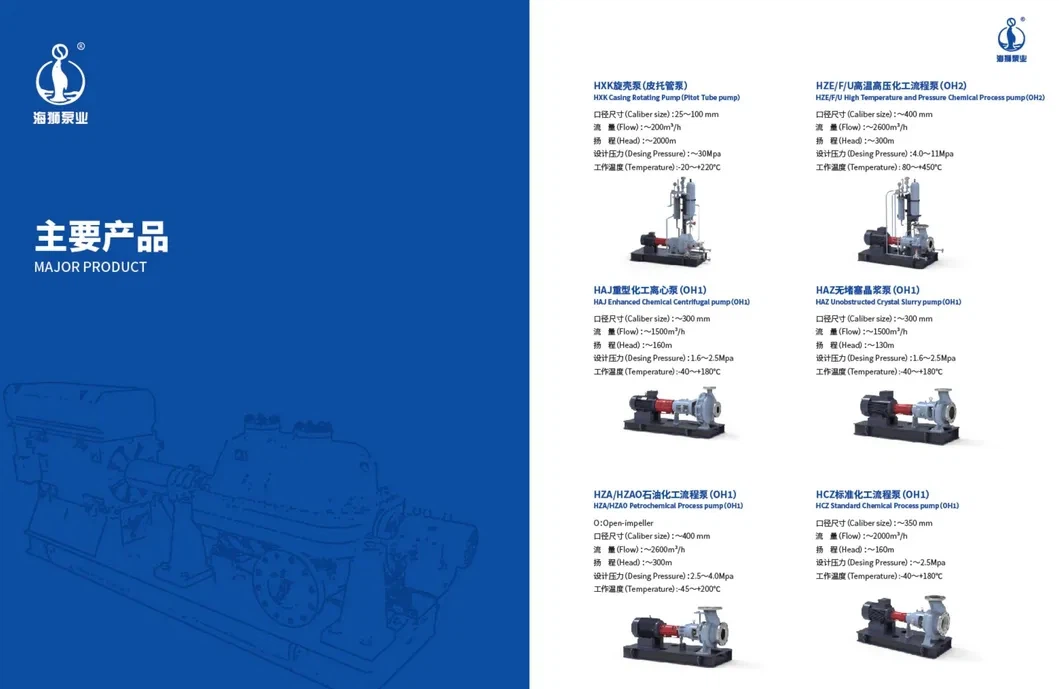
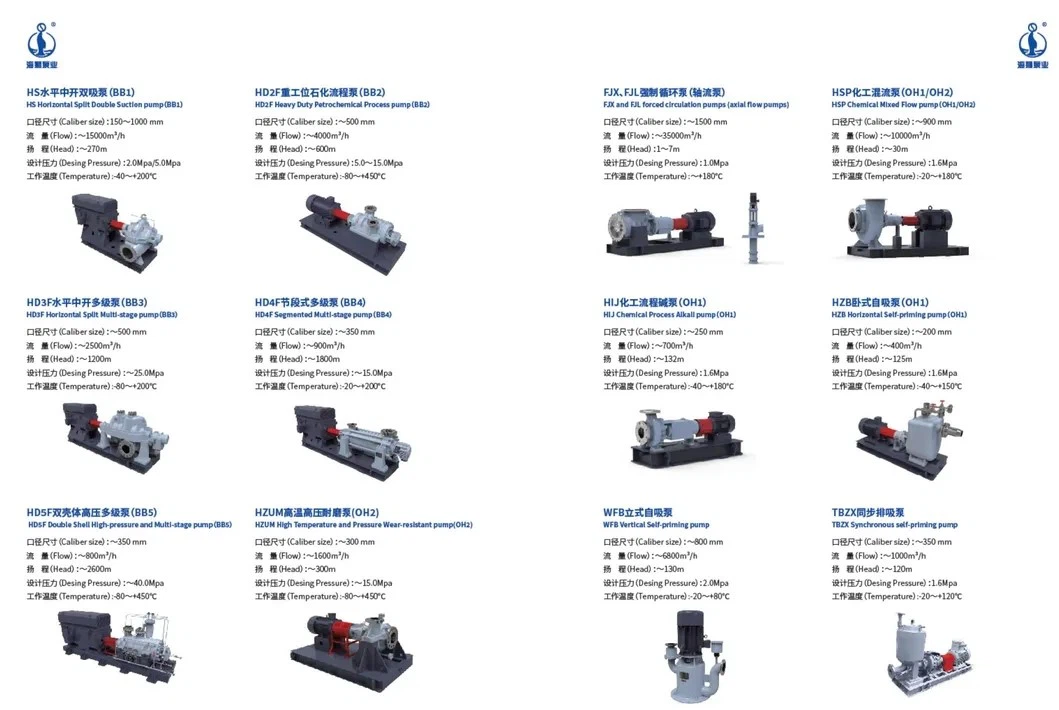
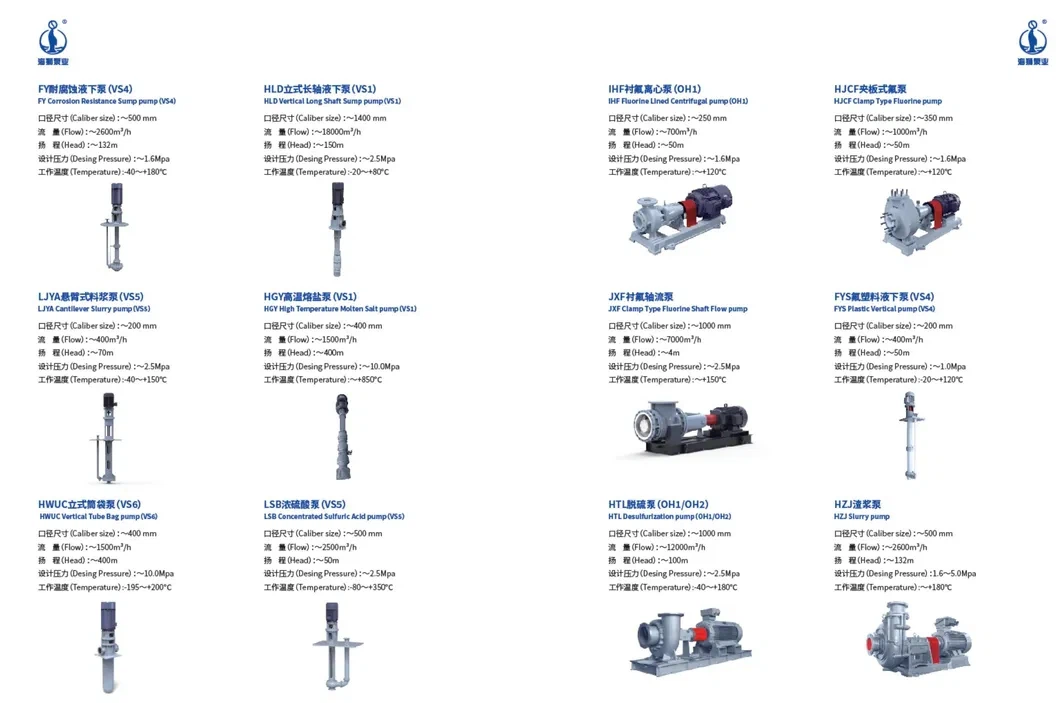

workshop

exhibition


Certification certificate

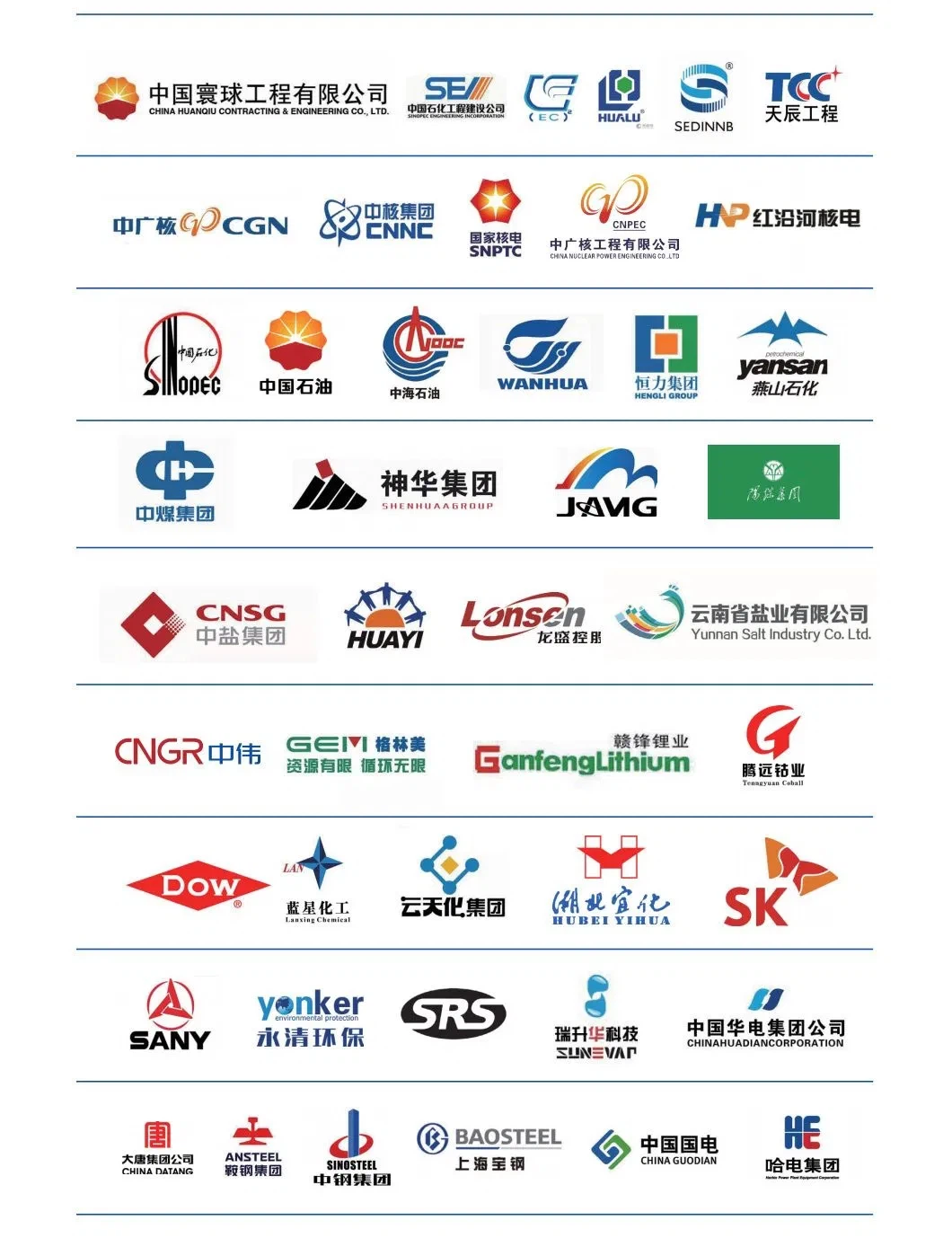
Cooperative brand
Packaging & Transportation

FAQ
Q: Do you provide training for overseas customers?
A: Yes, we provide remote training via video or offer training at our factory.
Q: Are your pumps suitable for continuous 24/7 operation?
A: Yes, many of our chemical pumps are designed for long-term continuous operation under industrial conditions.
Q: Can your pumps be used for abrasive chemical slurries?
A: Yes, we offer abrasion-resistant models with special materials like hard iron or rubber lining.
Q: What type of impellers do you use for chemical pumps?
A: We offer closed, semi-open, open, and vortex impellers depending on the application needs.
Q: Are explosion-proof motors available for your chemical pumps?
A: Yes, we supply EX d and EX e rated motors for hazardous area installations.
Q: Do you supply dual-voltage motors?
A: Yes, our motors can be configured for dual voltage (e.g., 220/380V or 380/660V) as required.
Q: Can your pumps handle hot liquids?
A: Yes, our pumps can be designed to handle liquids up to 350°C with appropriate cooling and materials.
Hot Tags: axial flow chemical process pump, China axial flow chemical process pump manufacturers, suppliers, factory, Cantilever Type Axial Flow Pump, Self Priming Axial Flow Pump, Gravel Cantilever Type Axial Flow Pump, Vacuum Centrifugal Axial Flow Pump, Centrifugal Circulating Submersible Axial Flow Pump, axial water pump


